The St Julian's issue
Seeing Malta from St Julian's Without Hiring a Car
Ferry times, bus numbers and the tickets you have to book months ahead: how a St Julian's base reaches Valletta, Mdina, the temples and the sand without ever touching a steering wheel.

By Callum ReidThe parts of St Julian's worth the walk.

The promenade east of Spinola is quiet at eight in the morning, and that is the hour to leave. Twenty-five minutes on foot, or ten on the bus, gets you to the ferry terminal at Sliema Ferries; five minutes of open water after that and you are standing under Valletta's bastions, working out whether to take the stairs or the lift. Almost nothing on this island sits more than about ninety minutes from St Julian's on public transport, and a hire car mostly buys you a parking problem.
Getting off the headland

Two moves cover nearly every day out. The first is the water. Valletta Ferry Services (Sliema Ferries terminal, a short bus ride from St Julian's) runs boats every 30 minutes, Monday to Saturday plus Sundays and public holidays, with late sailings from June to October. It is walk-on with no booking, €1.50 to €3 single and roughly €2.80 to €5 return, children around €1. Groups of any size simply queue; at worst a party of fifteen splits across two sailings twenty minutes apart. The same operator runs the Valletta to Three Cities crossing, which matters more than it sounds, because one company gets you to both sides of the Grand Harbour without a taxi.
The second move is the bus, and the two routes worth memorising are 222, which runs direct from the Sliema/St Julian's corridor to Mellieħa Bay every 30 minutes in about an hour, and buses 81 and 85, which leave from Valletta for the south-east in 30 to 40 minutes. Everything below hangs off those. If you are still choosing a bed, weigh the walk to the ferry terminal in the St Julian's hotel search. A room ten minutes from the promenade changes the shape of every morning.
Plan your St Julian's trip
Live prices from our booking partners.
Free cancellation on many rooms. We may earn a commission when you book.
A weekday morning in Valletta
Cross early and walk the whole thing in one line, from the lower quay up into the grid and out again at the gardens. Do it on a weekday: the first stop is closed on Sundays and public holidays.
St John's Co-Cathedral (Valletta, in the centre of the grid) is the reason to cross the water. The plain façade gives no sign of the interior. Tickets are timed and bought online, around €15 for an adult with reductions for students, seniors and children, and the audio guide is included in that price. The dress code is enforced at the door: shoulders covered, and no stilettos, which is a rule about the marble floor and not about modesty. Go at opening, before the cruise-ship flow arrives. Large groups should pre-book their slots and bring a licensed guide; couples can be flexible on the day.
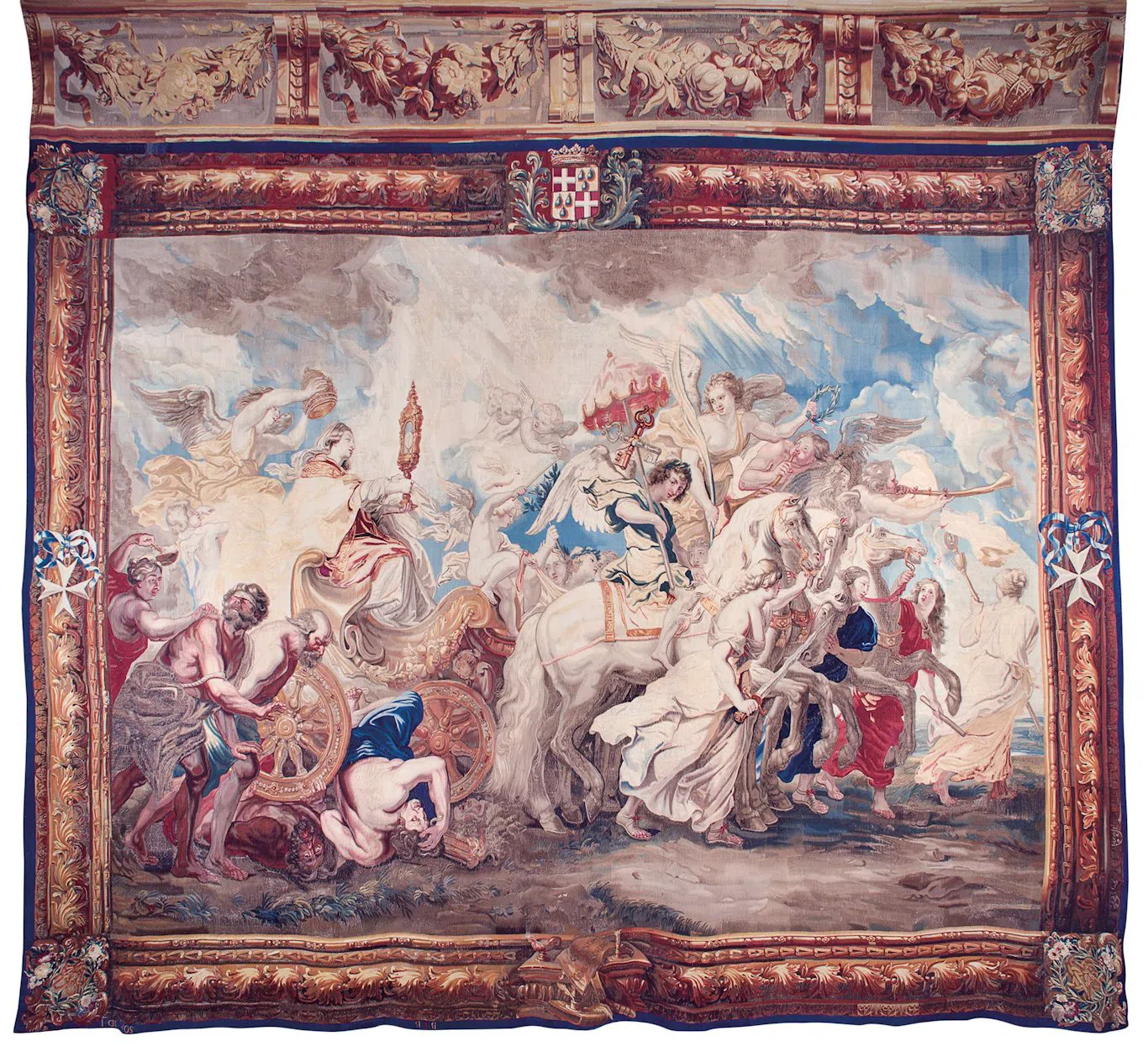
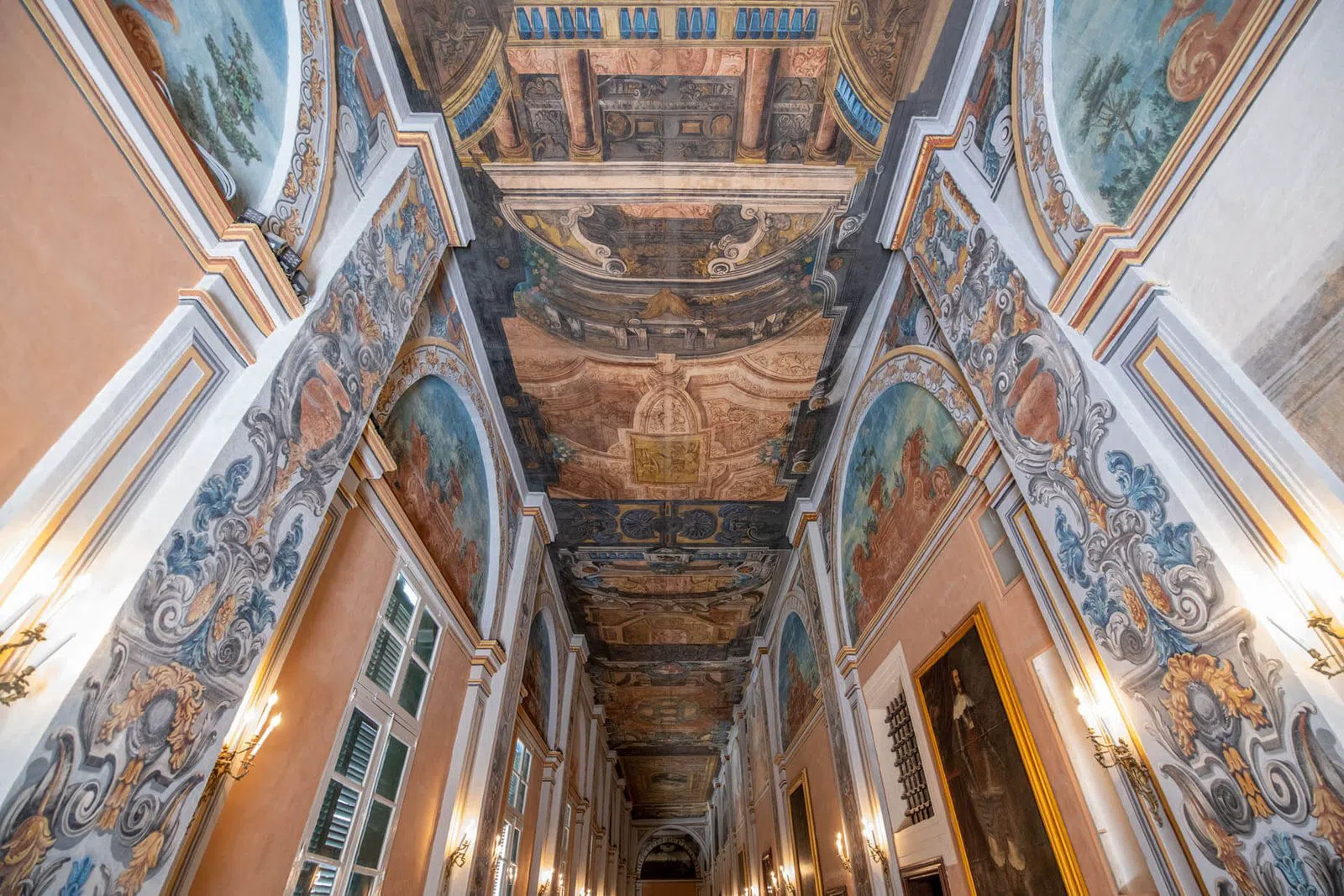
From there it is a few minutes' walk to the Grand Master's Palace and Palace Armoury (Valletta), reopened in 2024 after a €40m restoration that put the Armoury back in its original 1605 hall. Entry is around €15, walk-in or online, and it takes coach-sized groups without strain. If your party is doing several state sites across the week, the Heritage Malta multi-site pass brings the per-head cost down.
End the walk at Upper Barrakka Gardens and the Barrakka Lift (Valletta, above the Grand Harbour). The gardens are free and unticketed. The lift does a job: €1 for a return valid the same day, dropping you 58 metres from the terrace to the harbour quay, which is how you get from the upper city to the ferry pontoon on foot. Time your arrival for the noon or 16:00 gun. The lift takes small groups per car, so a party of twelve stages through in batches of four or five.
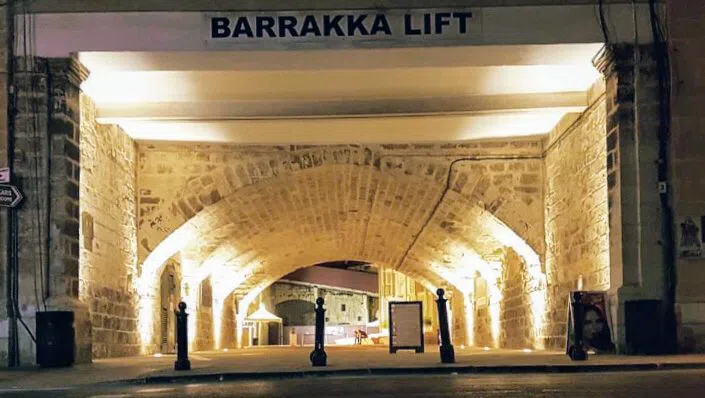
Down the lift and across to Fort St Angelo
The Three Cities are the quiet counterweight to a St Julian's base, and the crossing from the lower quay takes minutes. Fort St Angelo (Birgu, across the Grand Harbour) is the anchor: a Heritage Malta site with daily entry, no booking needed for a normal visit, around €8 adult, €5 senior or student and €3 child. Walk up through Birgu's alleys from the pontoon and you get the harbour from the opposite side, with Valletta as the view instead of the vantage point. The upper Magistral Palace section is run by the Order of Malta and has its own access arrangements, so treat it as a separate question at the desk. Parts of the fort have closed for conservation works at times, so check Heritage Malta on the morning you plan to go, not the week before.
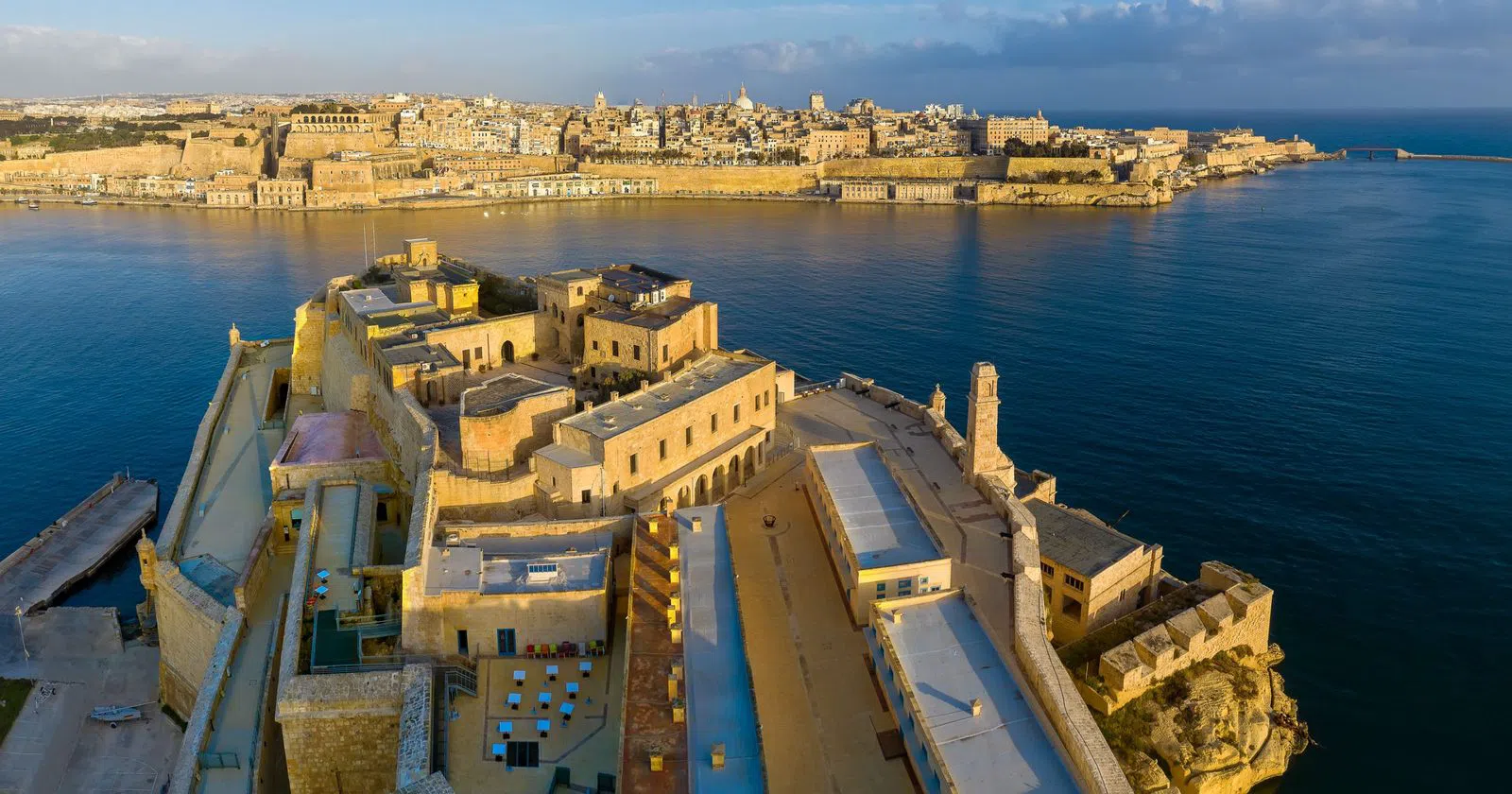
The Silent City and the day around it
Mdina is a bus ride inland and works as a full day if you build it around three stops instead of a lap of the walls.
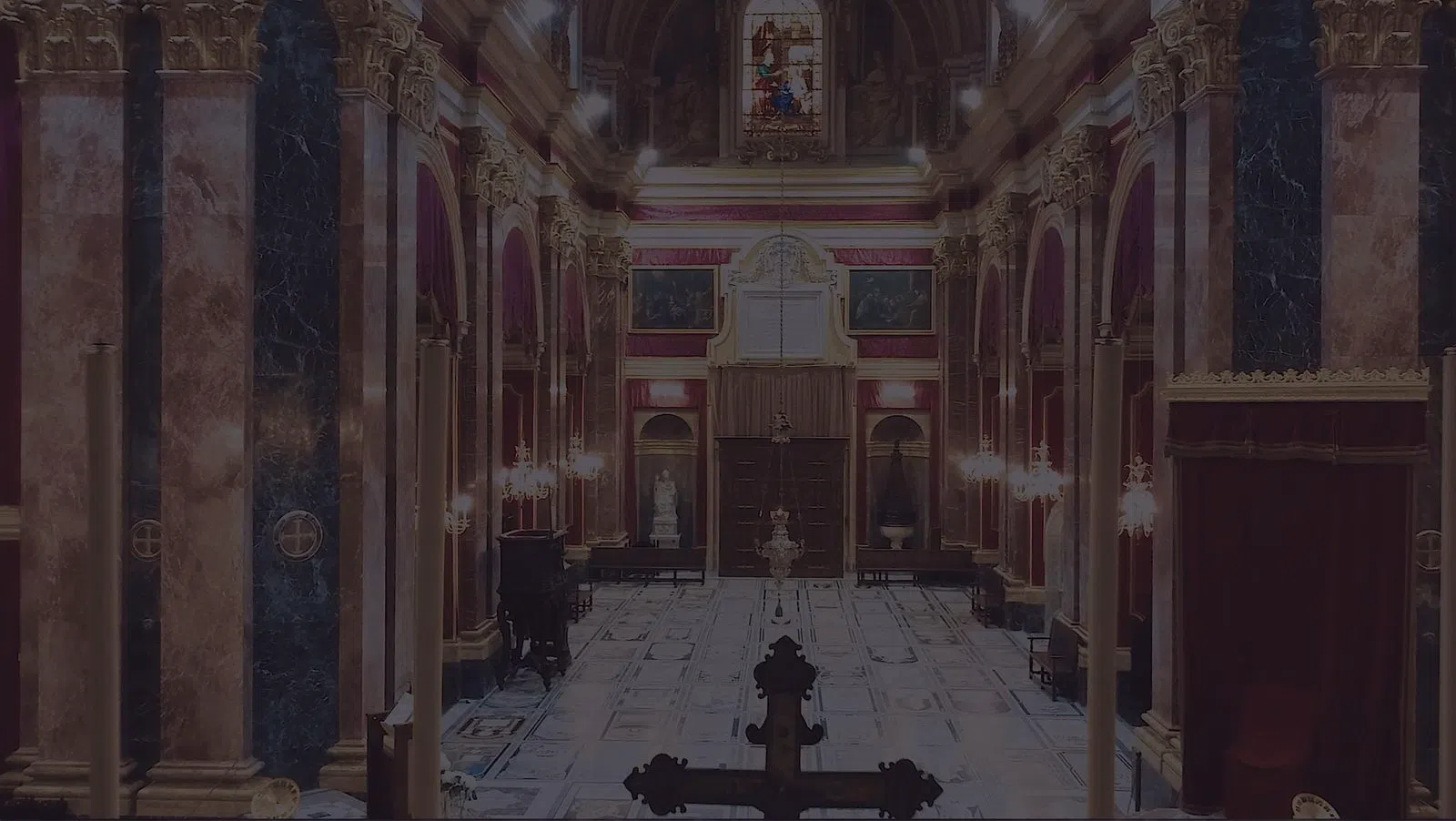
Mdina Metropolitan Cathedral and Cathedral Museum (inside Mdina's gate) is the anchor sight, and the ticketing catches people out: you buy at the museum desk to the right of the cathedral façade, not at the church doors. It is a combined ticket, around €15 for an adult, about €10 for seniors and students, under-12s free, and it is straightforward for groups. Museum hours run Monday to Saturday to roughly 16:30 with last tickets at 16:15, and it closes on public holidays, so an afternoon arrival on a Saturday is cutting it fine.
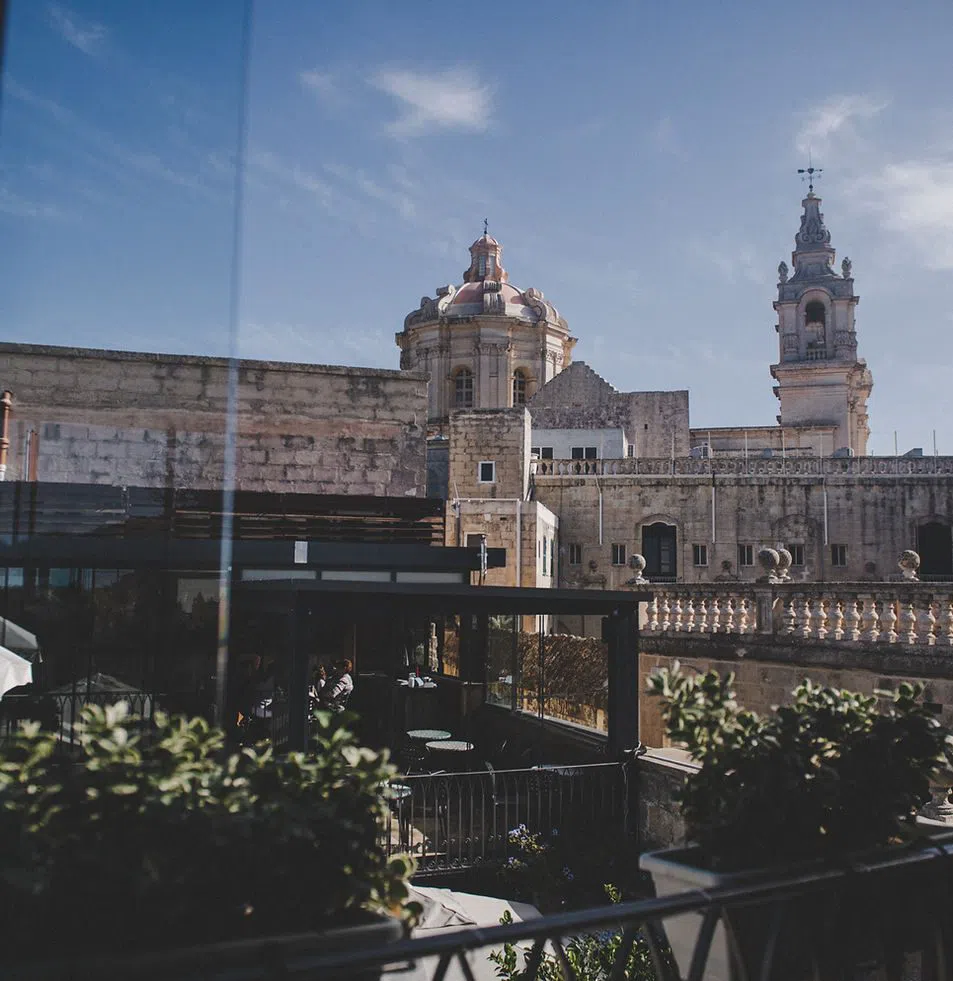
Fontanella Tea Garden (Mdina, on the bastion wall) has been there forty years and is still worth the stop, because from the terrace you see how small the island is, the whole north-east laid out to the sea. Cake and coffee run about €5 to €12 a head, light meals more. There are no bookings for the terrace at busy hours, so a large group either waits or splits across tables; mid-afternoon and late evening are calmer. It stays open daily until about 23:30, which makes it a sunset stop before the bus back as well as a mid-walk break.
Five minutes' walk outside the gate, St Paul's Catacombs (immediately west of Mdina) makes the natural second half of the day instead of a separate trip. Entry is around €6 adult, €4.50 youth or senior, €3.50 child on a Heritage Malta ticket, walk-in. The passages are narrow and low, so a group of twelve moves at a crawl. Split into parties of three or four and stagger your descents. The complex has had a weekday closing day, so confirm the specific day you intend to visit.
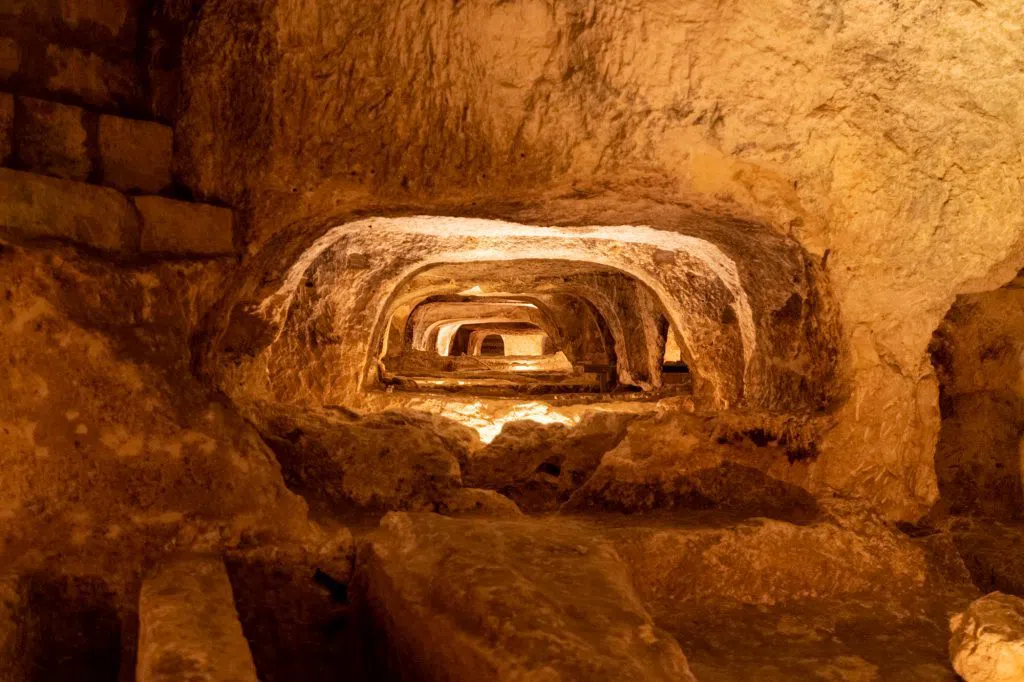
The south coast in one afternoon
The temples and the sea caves sit on the same bus corridor, which makes them one trip rather than two. Ħaġar Qim and Mnajdra Temples (on the southern cliffs) share a combined ticket of about €10 for an adult, with youth, senior and child reductions, covering both temples and the visitor centre. They predate the pyramids and they are an open site that handles groups comfortably. There is little shade beyond the protective canopies, so go early or late in summer and carry water.

Down the road, Blue Grotto boat trips (Wied iż-Żurrieq, below the temples) are bought at the quayside kiosk in cash. There is no advance booking, boats hold 8 to 12 people, and a group simply boards consecutive boats. It is €8 to €10 an adult, about €5 a child, for 20 to 25 minutes on the water. Two caveats: the blue only shows between roughly 09:00 and midday on a sunny day, and the boats do not sail in rough seas. Check the forecast before committing to the bus ride, and treat the temples as the reason for the trip with the caves as the bonus.
Sunday morning at the fish quay
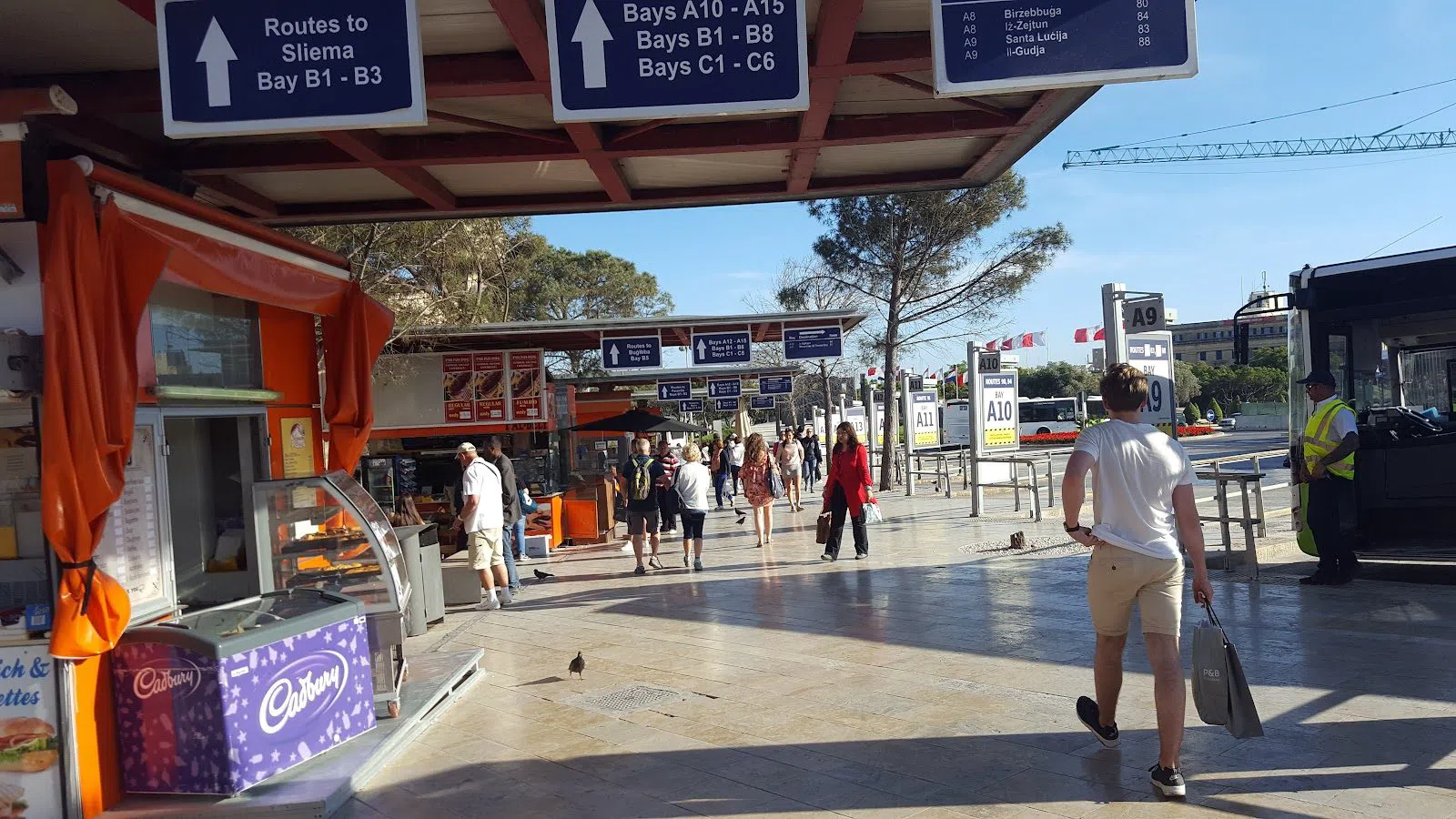
Marsaxlokk Sunday Market (the fishing harbour in the south-east) is free and open-air, with no constraint on group size. Buses 81 and 85 run from Valletta in roughly 30 to 40 minutes, so the sequence from St Julian's is ferry, then bus, and an early start pays. Arrive between 07:00 and 09:00 and you get the market the village actually uses; the fish stalls thin out by midday and what is left leans towards souvenirs. The quayside restaurants fill fast at Sunday lunch and a seafood plate runs about €25 to €45 a head, so book ahead for six or more instead of walking the row hopefully at one o'clock.
The ticket you book before you fly
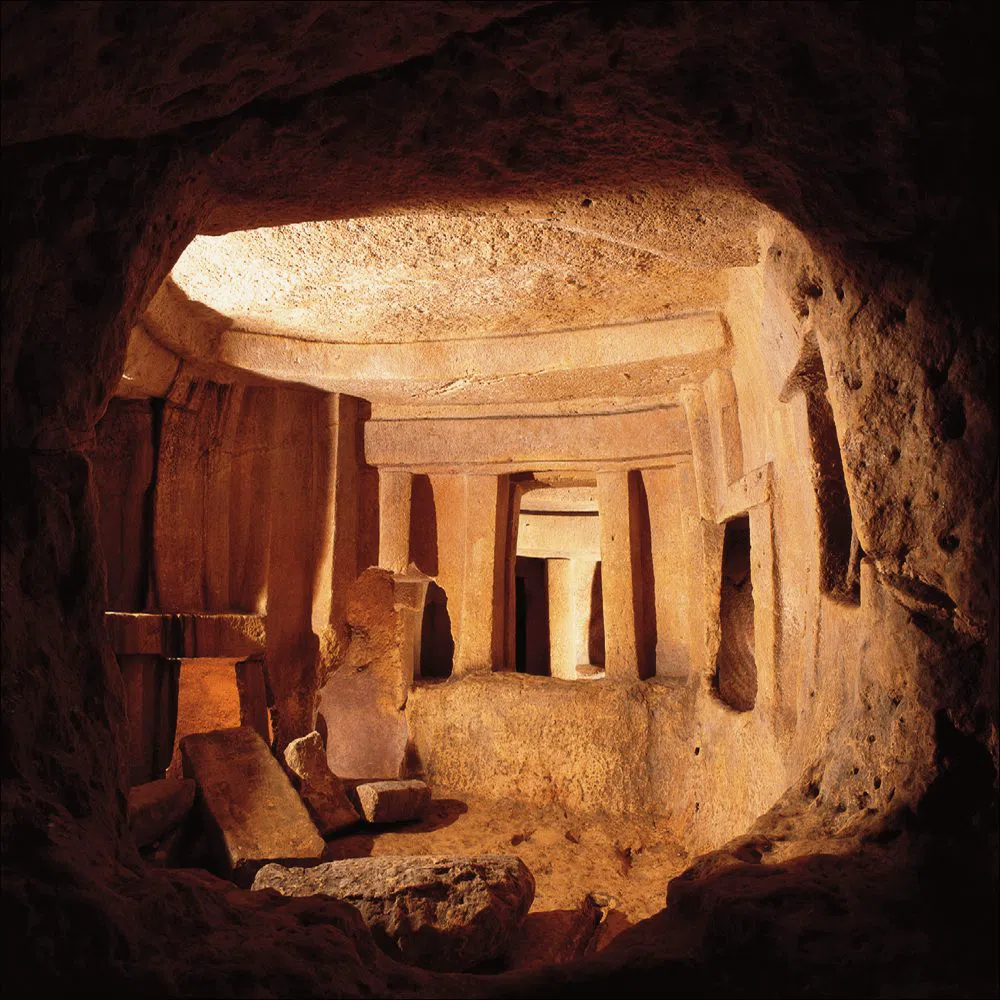
Ħal Saflieni Hypogeum (Paola, reachable on a normal bus) admits 80 visitors a day in timed parties of ten. Tickets go direct through Heritage Malta, months in advance. Third-party sellers do not have them, whatever their listings say. Advance tickets are about €35; a small number of last-minute next-day tickets go for around €50. It is a hard no for any group larger than ten, and even a party of four needs every place booked in the same window. Book two to three months out or accept that you will miss it. No car is involved at any stage; the only requirement is forward planning.
Sand on a single bus
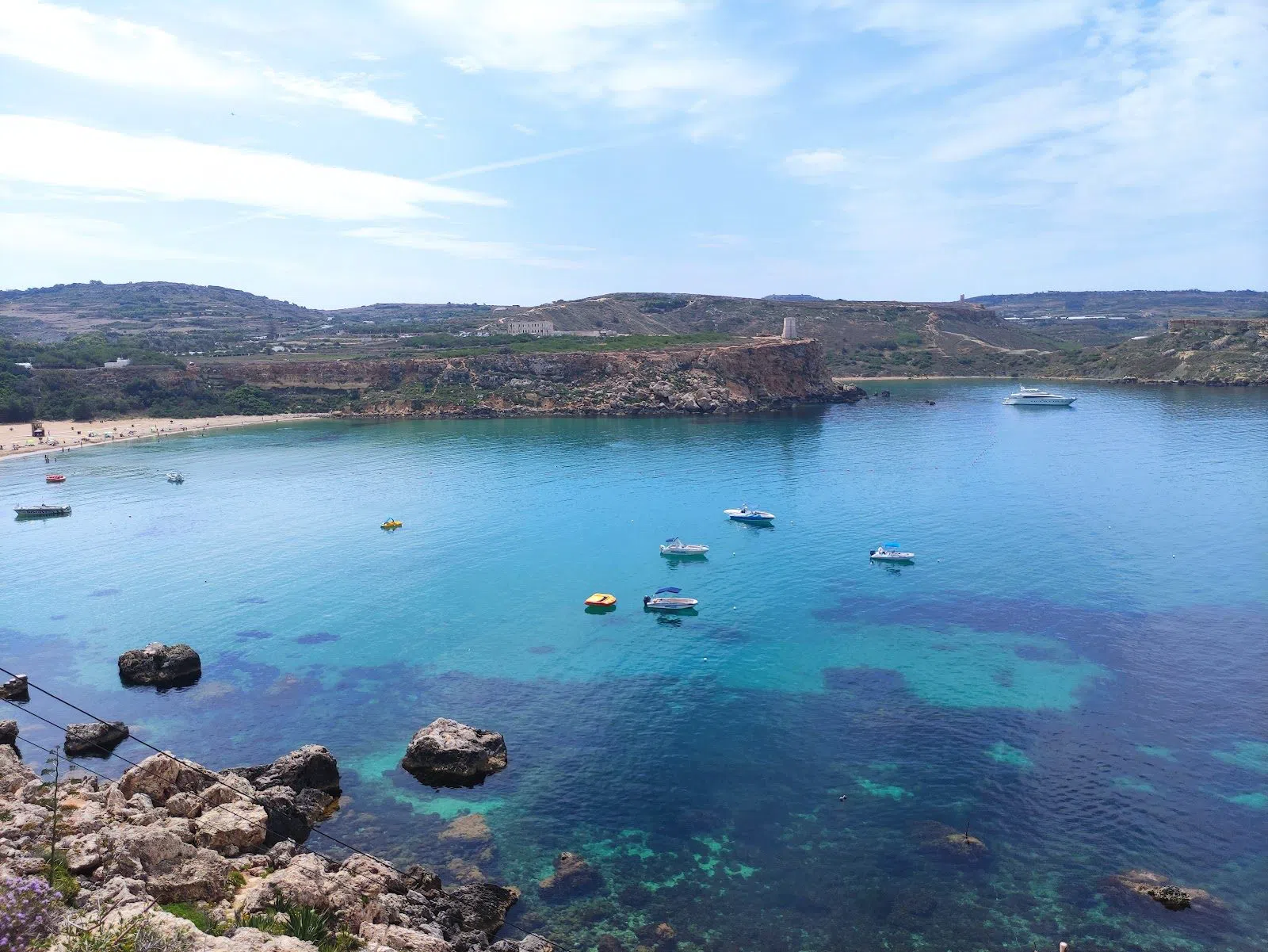
Golden Bay and Għajn Tuffieħa (the north-west coast) give you the best-reached sand on one bus from the St Julian's corridor, with one trap: stay on past the 'Riviera' stop and ride to the Għajn Tuffieħa terminus for Golden Bay itself. Both are public beaches with no door policy. Golden Bay has sunbed hire at roughly €15 to €25 a set and five or six cafés; lifeguards are on duty from 15 June to 15 September. Walk the headland path and down the steps to Għajn Tuffieħa if you want the same water with fewer people. It is a genuine climb back up, so factor that in for anyone unsteady.
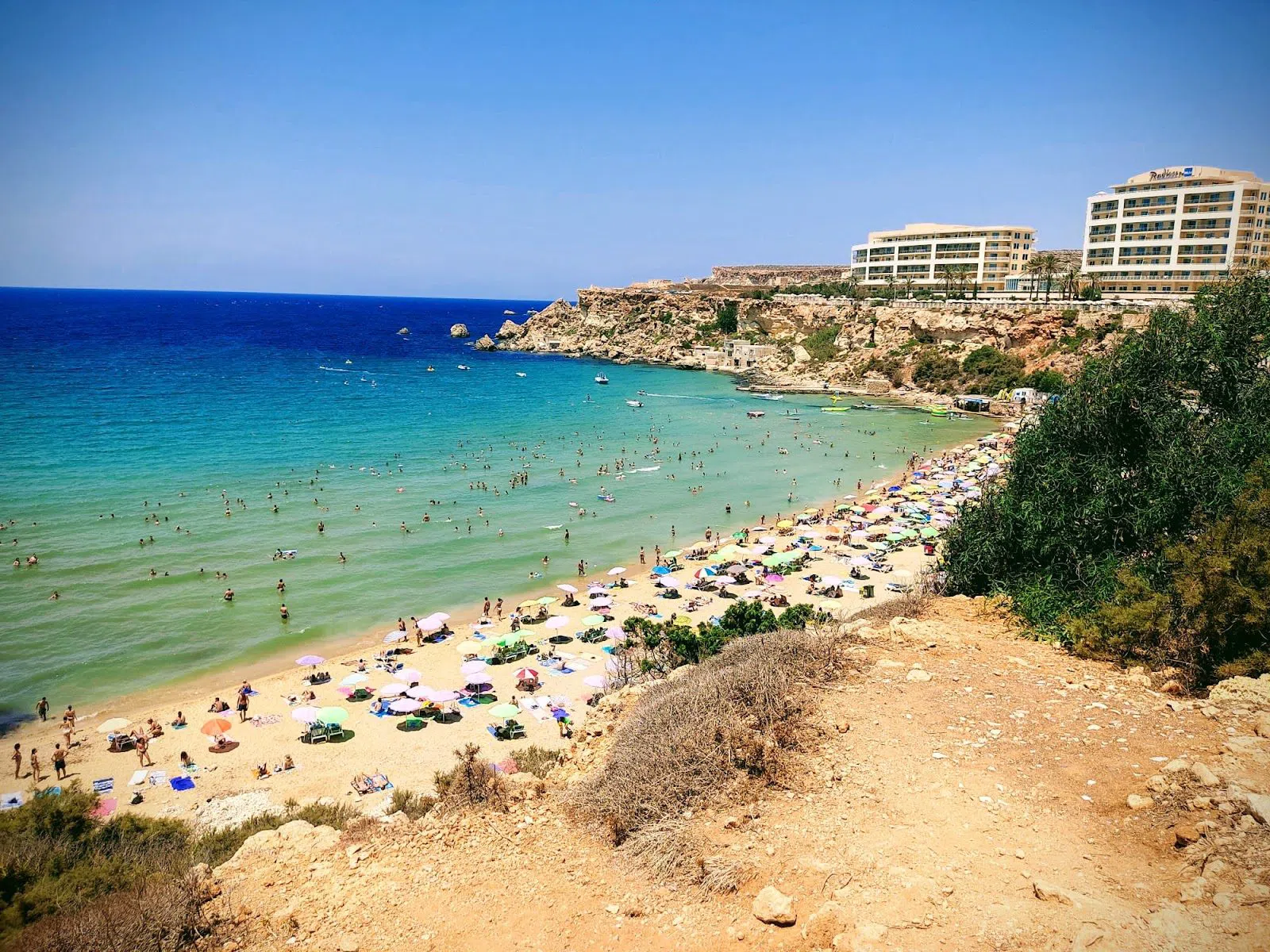
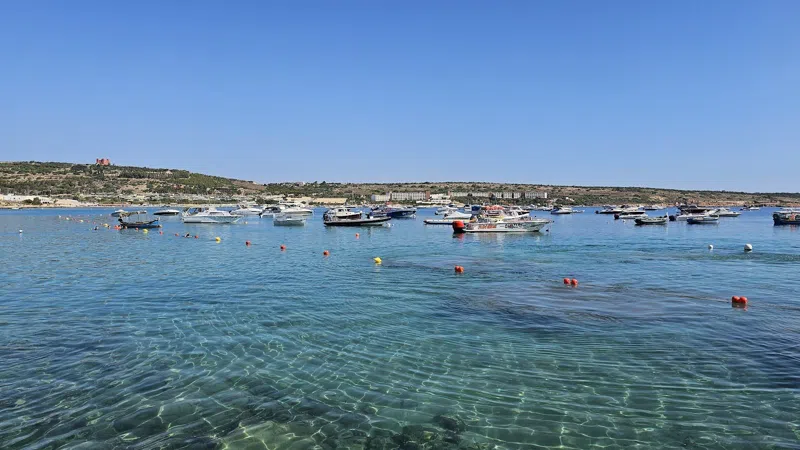
Mellieħa Bay (Għadira Bay) (the far north) is Malta's largest sandy beach and the simplest for mixed-ability groups, because the water stays waist-deep a long way out. It is a public Blue Flag beach with full facilities, watersports concessions and seasonal lifeguards, sunbeds again around €15 to €25. Bus 222 runs direct every 30 minutes and takes about an hour, which is the shortest door-to-sand time you will get from a car-free base up here.
Two boats to two islands
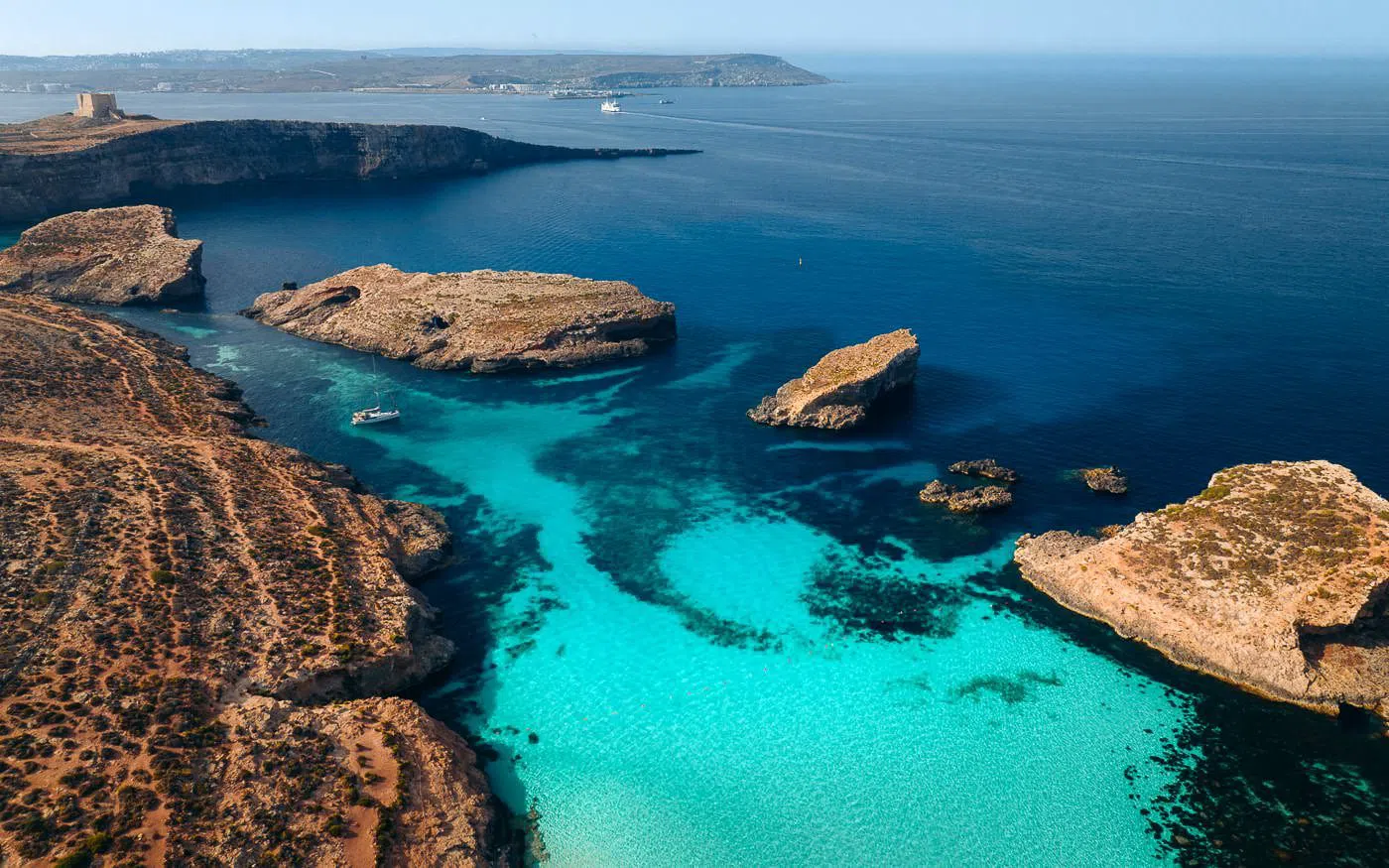
Blue Lagoon, Comino (the channel between the main island and Gozo) has run on a capped-entry system since May 2025: 4,000 people at a time across three daily windows, with a free timed landing pass required per person through the official portal and exchanged for a wristband at disembarkation. Groups must book every pass individually, and turning up without one is not an option. The boat is the real decision. Sailings from the Sliema seafront are €25 to €40 return but 70 to 90 minutes each way; going north by bus to Ċirkewwa or Marfa and crossing in 25 minutes costs €10 to €15 return and buys you hours in the water instead of on a deck.
Gozo Highspeed (Tigné seafront, a short walk from the ferry terminal) changed the arithmetic on 5 May 2026, when the fast ferry began running direct from Tigné via Buġibba to Gozo, with departures around 07:30, 10:30, 13:30 and 16:30. Fares start at about €6.50 to €8.50 one way with returns discounted, foot passengers only, and booking online is sensible in summer. Four sailings a day is the constraint, not the price: take the 07:30 and you get a full day; miss it and the Valletta route runs far more frequently.

Practical notes
Carry cash. The Blue Grotto kiosk takes nothing else, market stalls prefer it, and the €1 Barrakka lift fare is easier in coins. Everything else (cathedral, palace, ferries, fast ferry) is comfortable online or by card.
Sequence the week around the closures rather than the weather. St John's Co-Cathedral is shut on Sundays and public holidays; the Mdina museum stops selling at 16:15 and closes on public holidays; St Paul's Catacombs has had a weekday closing day. That leaves Sunday for Marsaxlokk at dawn and a beach afterwards, which is how the calendar wants to fall anyway.
On budget: a full Valletta day with both indoor sites and the lift runs about €35 a head plus lunch, the ferry included. A beach day is the bus fare and an optional €15 to €25 for a sunbed set. Comino is the one where the boat, not the island, sets the price. Book the Hypogeum before anything else, then build the rest around it; the other tickets can be bought the day before. For where to eat and drink back at base between the trips out, see the St Julian's guide.
Before you go
Is St Julian's a practical base for seeing Malta without a car?
Yes. The ferry terminal at Sliema Ferries is a ten-minute bus ride or twenty-five-minute walk away, and boats cross to Valletta in five minutes every 30 minutes for €1.50 to €3 single. Bus 222 runs direct to Mellieħa Bay in about an hour, and from Valletta buses 81 and 85 reach Marsaxlokk in 30 to 40 minutes. Almost every major site is within about ninety minutes of the headland by public transport.
Which Valletta sights are worth the crossing if I only have one morning?
Start at St John's Co-Cathedral at opening, before the cruise-ship crowds. Timed online tickets are around €15 with the audio guide included, and it is closed on Sundays and public holidays. Then the Grand Master's Palace and Palace Armoury for about €15, reopened in 2024 with the Armoury back in its 1605 hall. Finish at Upper Barrakka Gardens, which are free, and take the €1 lift down to the harbour quay.
Do I need to book the Ħal Saflieni Hypogeum in advance?
Yes, and months ahead. Only 80 visitors a day are admitted, in timed parties of ten, booked direct with Heritage Malta at about €35. Third-party sellers do not hold tickets. A small number of last-minute next-day places go for around €50. A normal bus to Paola gets you there, so the booking is the hard part rather than the journey.
Which beach is easiest to reach by bus from St Julian's?
Mellieħa Bay (Għadira Bay) on bus 222, which runs direct every 30 minutes and takes about an hour. It is a public Blue Flag beach with full facilities, seasonal lifeguards and water that stays waist-deep a long way out, so it suits families and mixed-ability groups. Golden Bay is the alternative for better sand: stay on past the 'Riviera' stop to the Għajn Tuffieħa terminus.
Can I do Gozo or the Blue Lagoon as a day trip without a car?
Both, with different boats. Since 5 May 2026 the Gozo Highspeed fast ferry runs direct from the Tigné seafront via Buġibba, departing around 07:30, 10:30, 13:30 and 16:30 from about €6.50 to €8.50 one way; take the 07:30 for a full day. For the Blue Lagoon on Comino you need a free timed landing pass booked per person through the official portal, then either a Sliema boat (€25 to €40 return, 70 to 90 minutes each way) or a bus north to Ċirkewwa and a 25-minute crossing for €10 to €15.